

If you are considering a career change or looking into making Human Resources your main career, you will probably find a lot of misinformation on the internet. Finding a clear, honest overview of CIPD Level 3 is not difficult, but figuring out whether this career path is worth pursuing and whether you can handle the workload is the harder part.
For this, it is essential to know what you are actually signing up for. By the end of this guide, you will understand the structure of CIPD Level 3, the specific skills it builds, what the assignments really look like, and how to decide if this is the right starting point for your HR journey.
What Is CIPD Level 3? The Qualification Explained
CIPD Level 3 is the Foundation Certificate in People Practice. This is an entry-level professional qualification awarded by the Chartered Institute of Personnel and Development. It sits at RQF Level 3, which means it is an A-level equivalent. Once you complete the course, you earn Foundation Membership.
This course is designed for beginners and people just starting their careers. You need zero prior HR experience to enrol. Unlike traditional academic courses, there are no exams and the entire qualification is graded through practical and written assignments. Most learners wrap it up in 6 to 12 months studying part-time alongside their day jobs.
| Qualification Detail | Information |
|---|---|
| Full Name | Foundation Certificate in People Practice |
| Awarding Body | CIPD |
| RQF Level | Level 3 (A-level equivalent) |
| Number of Units | 4 mandatory |
| Assessment Method | Written assignments — no exams |
| Membership Awarded | CIPD Foundation (Assoc CIPD) |
| Entry Requirements | No prior HR experience |
| Typical Duration | 6–12 months part-time |
For further official qualification standards, refer to the CIPD official Foundation Certificate page.
CIPD Level 3 Course Outline: The 4 Units You Will Study
With a highly structured curriculum, there are four mandatory units that you need to complete to obtain the certificate. The CIPD Level 3 course outline is designed to build your knowledge logically, starting from the broader business environment down to the day-to-day essentials of HR.

| Unit Code | Unit Title | What It Covers |
|---|---|---|
| 3C001 | Business, Culture and Change in Context | Organisational theory, external factors, culture, and change management |
| 3C002 | Principles of Analytics | People data, HR metrics, evidence-based decision making |
| 3C003 | Core Behaviours for People Professionals | Ethical practice, CIPD Profession Map, CPD |
| 3C004 | Essentials of People Practice | Recruitment, employment law, reward, L&D basics |
It is okay to be confused and not understand what is covered in Level 3 at first. With the right guidance and proper assignments, your units will feel like a breeze. All the dots start connecting once you get past the initial learning curve. Many students partner with a dedicated CIPD Level 3 assignment company to ensure their answers meet the strict criteria for each module right from the start.
What Is CIPD Level 3 3C001?

3C001 is "Business, Culture and Change in Context." It covers organisational structures, how external environments impact business, workplace culture, and change management.
Because it is typically the very first assignment submitted, it sets the writing standard for your entire programme. You are assessed through a written, scenario-based assignment. If academic writing is new to you, getting support on 3C001 is a smart move to build your confidence early on.
What Skills Does CIPD Level 3 Actually Build?
What skills does CIPD Level 3 give you? It is not just theory — the whole point is workplace application. The programme splits its focus into two main areas: technical HR knowledge (such as employment law and recruitment) and core professional behaviours (such as ethical practice).
Here is exactly what you walk away knowing how to do:
| Skill Area | Unit | Workplace Application |
|---|---|---|
| Organisational awareness | 3C001 | Understanding your employer's strategic context |
| People data and analytics | 3C002 | Using HR metrics to inform decisions |
| Ethical and professional practice | 3C003 | Navigating sensitive people situations |
| Recruitment and selection | 3C004 | Supporting or leading hiring processes |
| Employment law basics | 3C004 | Advising on contracts, rights, and compliance |
| L&D support | 3C004 | Identifying needs, facilitating development |
| Change management awareness | 3C001 | Supporting teams through organisational change |
Is CIPD Level 3 Hard? What the Assessments Actually Involve
Let us be completely honest here. Is CIPD Level 3 hard? The HR concepts themselves are very accessible. However, the assessments are where students stumble.
There are no exams, which is a huge relief for many. Instead, it is a portfolio-based assessment system relying purely on written responses. The real challenge is not the content — it is adapting to the academic writing style required to pass. You have to write structured arguments, apply HR theory to fictional workplace scenarios, and use formal citations.
| Assessment Factor | What to Expect |
|---|---|
| Assignment format | Written scenario-based responses |
| Word count per unit | 1,000–2,500 words approx. |
| Referencing style | Harvard referencing required |
| Resubmission policy | Typically one referral allowed per unit |
| Weekly study commitment | 6–10 hours part-time |
Most learners find the academic writing style — structured arguments, applied theory, Harvard referencing — the hardest adjustment.
Our CIPD Level 3 specialists help you get the format right from your first submission.
Partner with top-rated CIPD assignment help services today.
CIPD Level 3 vs Level 5: Which Is Right for You?
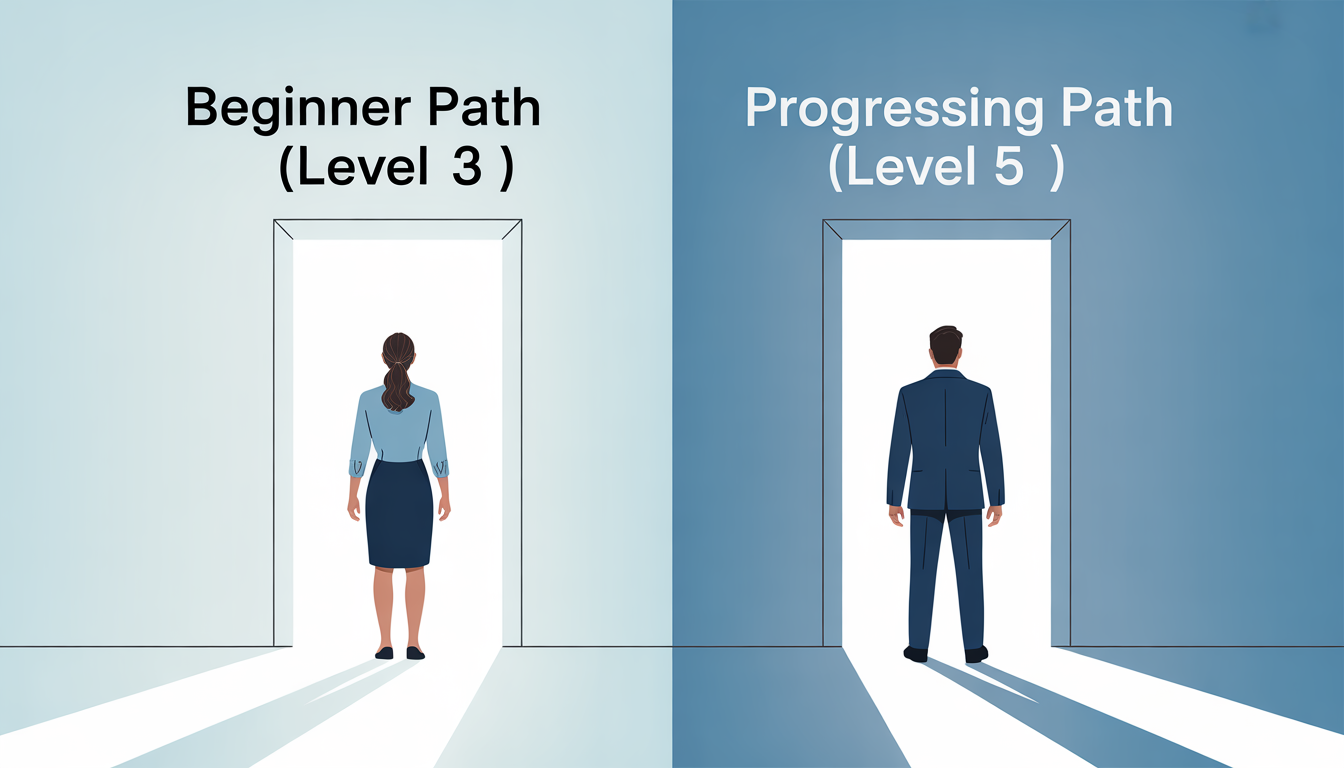
Before starting, people often get confused between opting for Level 3 or going straight for Level 5. To be decisive: if you have zero HR experience, you need to start at Level 3.
Level 3 is built for career changers. Level 5, the Associate Diploma in People Management, is noticeably harder and is meant for those who are already working in HR for 1 to 2 years. If you dive straight into Level 5, chances are you will struggle to apply its strategic concepts. For those progressing past Level 3, RQF Level 5 is the natural next step, where many seek CIPD Level 5 assignment writing help due to the jump in complexity.
| Comparison Factor | CIPD Level 3 | CIPD Level 5 |
|---|---|---|
| Full Name | Foundation Certificate in People Practice | Associate Diploma in People Management |
| RQF Level | Level 3 — A-level equivalent | Level 5 — Foundation degree equivalent |
| Best For | Complete beginners, career changers | HR practitioners with 1–2 years experience |
| Entry Requirement | No experience needed | Prior HR experience recommended |
| Number of Units | 4 mandatory | 7 units (core + specialist) |
| Assessment Depth | Foundational application | Critical analysis and strategy |
| Typical Duration | 6–12 months | 12–18 months |
The RQF framework is verified via Gov.uk / Ofqual.
What to Look for in a CIPD Level 3 Provider
When choosing the best CIPD Level 3 provider, remember that CIPD strictly sets the standards. Every approved provider teaches the exact same 4 units. You are not shopping for a different curriculum — you are shopping for the delivery format and support system.
Look closely at how they teach. Do you prefer self-paced online delivery or live blended learning? More importantly, ask about tutor feedback speed and whether they offer dedicated academic writing support. Slow feedback loops can completely stall your progress.
Finally, watch out for hidden costs. Your tuition fee paid to the provider rarely includes the mandatory CIPD student membership fee, which goes straight to the CIPD. Factor this into your total budget before committing.
Key Takeaways and Assignment Support
Here is a quick summary of what you need to remember before enrolling:
- CIPD Level 3 is the Foundation Certificate in People Practice
- 4 mandatory units, no optional modules (3C001–3C004)
- RQF Level 3 = A-level equivalent, earns Assoc CIPD membership
- 100% written assignments, no exams at any stage
- Designed for complete beginners, no prior HR experience required
- Level 5 is the next step — requires prior HR experience to be manageable
The Final Verdict
Understanding the course is step one. Producing assignments that meet CIPD's assessment criteria — structured arguments, applied theory, and correct referencing — is where most learners need support. Our specialists work exclusively with CIPD learners across all 4 Level 3 units.